
Chapter two of a longform series on motherhood and cerebral palsy
The Pressure to Hide My Cerebral Palsy
For most of my life, I have worked very hard to make my cerebral palsy as invisible as possible. Not because I was ashamed of it exactly — but because I didn’t want people to see me as incapable. I wanted to prove that I could do things on my own. That I didn’t need extra help. That I could keep up.
But one morning, during a simple phone call with my mom, something shifted in a way I wasn’t expecting. Coffee in hand, toddlers running around the house, I was talking through something that had been weighing on me. I had been feeling discouraged about logistics at church and how to handle solo trips while my husband works. My girls’ Sunday school is in one building, while my Bible study meets in another building across a small street. The two buildings are connected by stairs — no ramp — and I wasn’t sure I could navigate the stroller up and down the stairs on my own with two babies.
For most people, that probably wouldn’t be something they think twice about. But when you’re navigating motherhood with cerebral palsy, small logistical details can determine whether something feels manageable or overwhelming.
I wanted to go to Bible study. I needed that time for myself.
But I was struggling with how to make it work without feeling like I was asking for too much help.
The Sentence That Changed My Perspective
As I talked through it with my mom, she gently said something that stopped me cold.
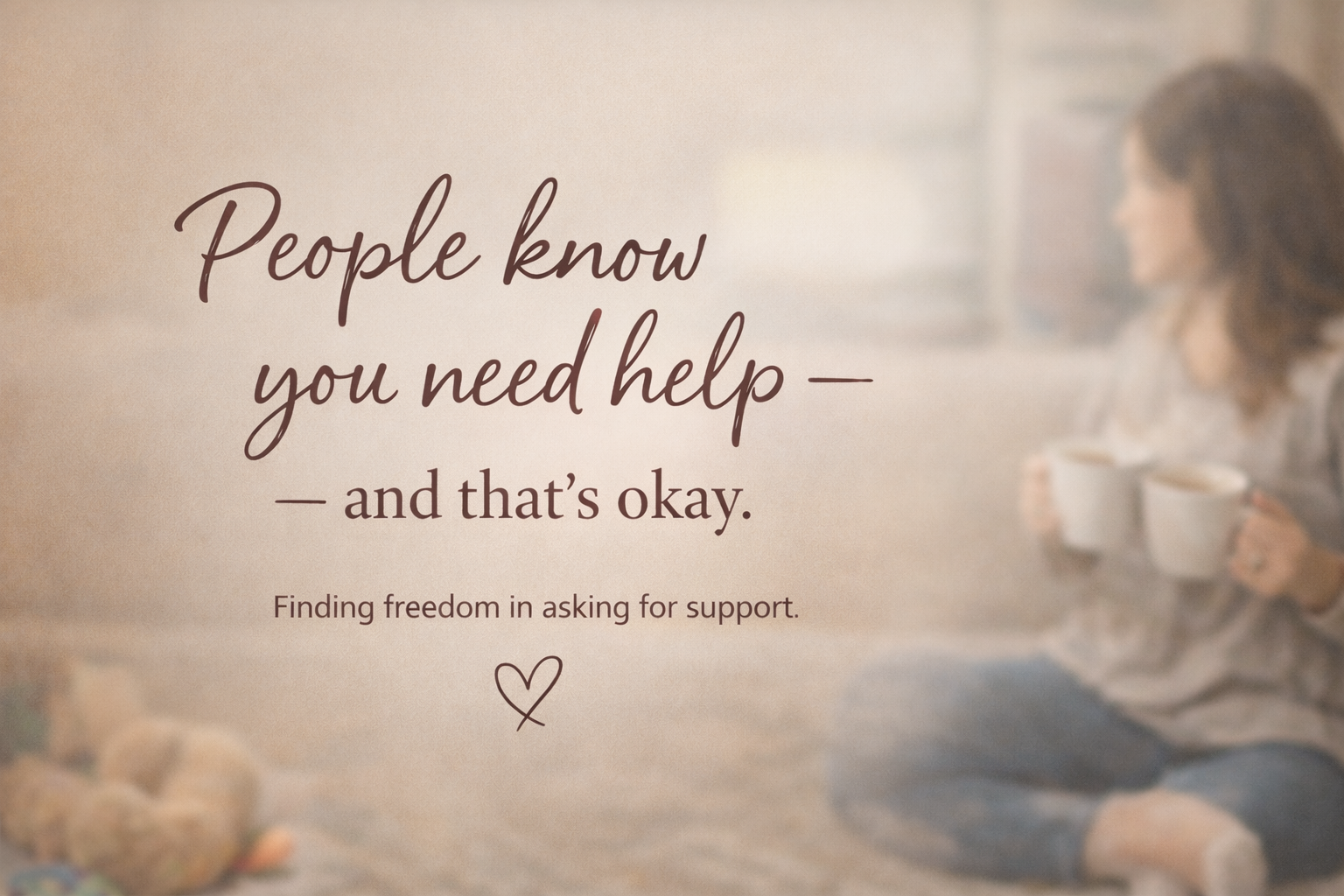
“People know you need help.”
I remember sitting there for a moment, completely still, trying to process what she meant.
Of course people know I have cerebral palsy. Anyone who watches me walk for more than a few seconds can see it. And I hate that.
But somehow, I had convinced myself that asking for help would surprise people — or confirm their assumptions about what I couldn’t do.
I was living with the lie that I had to prove I was capable, worthy, and independent, when in reality, no one is owed any explanation from me that I’m not offering.
The Freedom of Letting People See It
I don’t want people to see it. I would hide it in a heartbeat if I had the ability.
But I don’t.
I can’t.
However, that realization was unexpectedly freeing.
Because if people already know, then everything I had been doing to hide my need for help wasn’t protecting me.
It was exhausting me.
For so long, I believed that minimizing my needs made me stronger. That pushing through without assistance proved my independence.
But the truth is, independence doesn’t mean doing everything alone.
What Independence Really Means
Independence can also mean:
- Knowing what you need
- Advocating for accommodations
- Trusting people when they offer support
Asking for help with a disability doesn’t make someone less capable.
Sometimes it’s simply the most honest way to navigate the world.
Why This Matters Even More as a Mom
Now that I’m a mother, this realization carries even more weight.
I want my daughters to grow up understanding that strength doesn’t mean pretending you don’t need anyone.
Because the truth is we all need help sometimes. Disabled or not.
Oftentimes, it takes more strength to be vulnerable and ask for help.
I want my girls to see me advocate for myself. I want them to see that it’s okay to:
- Communicate your needs
- Ask for support
- Trust others when they offer help
If I hide those parts of my life, what am I teaching them?
That needing help is something to be embarrassed about?
That strength only counts if it looks effortless?
Those aren’t the lessons I want to pass down.
The Truth About Living With Cerebral Palsy
Living with cerebral palsy has taught me many things over the years.
But this realization might be one of the most important:
The world doesn’t become more accessible when we hide our needs.
It becomes more accessible when we speak up about them.
And sometimes the first step is simply allowing ourselves to believe that needing help doesn’t make us less capable.
It just makes us human.

Leave a Reply