
Chapter One of a longform series on motherhood and cerebral palsy
I spent years ignoring my body.
Not because I didn’t feel the pain or the fatigue, but because I didn’t want anyone to think I couldn’t do it. Living with cerebral palsy meant learning early that my capability would always be questioned, so I learned to push through — quietly, consistently, and without asking for anything extra.
I didn’t rest. I didn’t say no. I didn’t slow down unless I absolutely had to.
Instead, I learned how to endure.
Growing Up With Cerebral Palsy
How I learned to push through & the cost of endurance
Growing up with cerebral palsy meant constant awareness of my body, even when I pretended otherwise. I knew which movements would cost me later and which days would leave me depleted, but acknowledging that out loud felt risky. I worried that once people saw my limits, they would stop seeing my ability altogether.
So I organized my life around minimizing visibility. I compensated. I planned ahead. I pushed through discomfort and called it strength. Independence, for me, wasn’t about ease or balance. It was about proof. Proof that I could keep up. Proof that I didn’t need help. Proof that my body didn’t define me — even as I was managing it constantly.
There was pride in that endurance.
There was also a cost.
Learning to Endure Before Motherhood
The pride and cost of independence
Before motherhood, I could usually pay that cost in private. I could get through the day, get home, and let my body catch up with me quietly. I told myself that was normal. I told myself it was worth it.
Then I became a mother.
The Day I Fell While Spinning
What I was trying to protect (love vs limits)
One afternoon, I was already exhausted. The kind of tired that settles deep into your body, the kind you recognize but try to ignore because there’s still more to do. My daughter wanted to spin.
It was small and playful and ordinary. She asked with the kind of excitement that makes saying no feel unthinkable. I knew my body wasn’t steady enough. I knew spinning would throw off my balance. I knew I should have said no.
But I didn’t want her to see limitation before she saw joy.
So I tried.
I spun with her, smiling, pushing past the warning signals I had spent years training myself to ignore. And then I fell.
It wasn’t dramatic. There was no spectacle. Just the sudden realization that my body had reached a limit I couldn’t negotiate past. I remember the flash of embarrassment before the pain. The instinct to reassure her before checking myself. The familiar urge to make it seem like nothing had happened.
But it wasn’t nothing.
That fall wasn’t about spinning. It was about how deeply ingrained my instinct to push through had become — even in motherhood, even when safety mattered more than perception. I had learned how to endure, not how to listen.
What stayed with me afterward wasn’t just the fall. It was the fear underneath it.
Saying Yes Without Miscommunication
Balancing presence with self-care
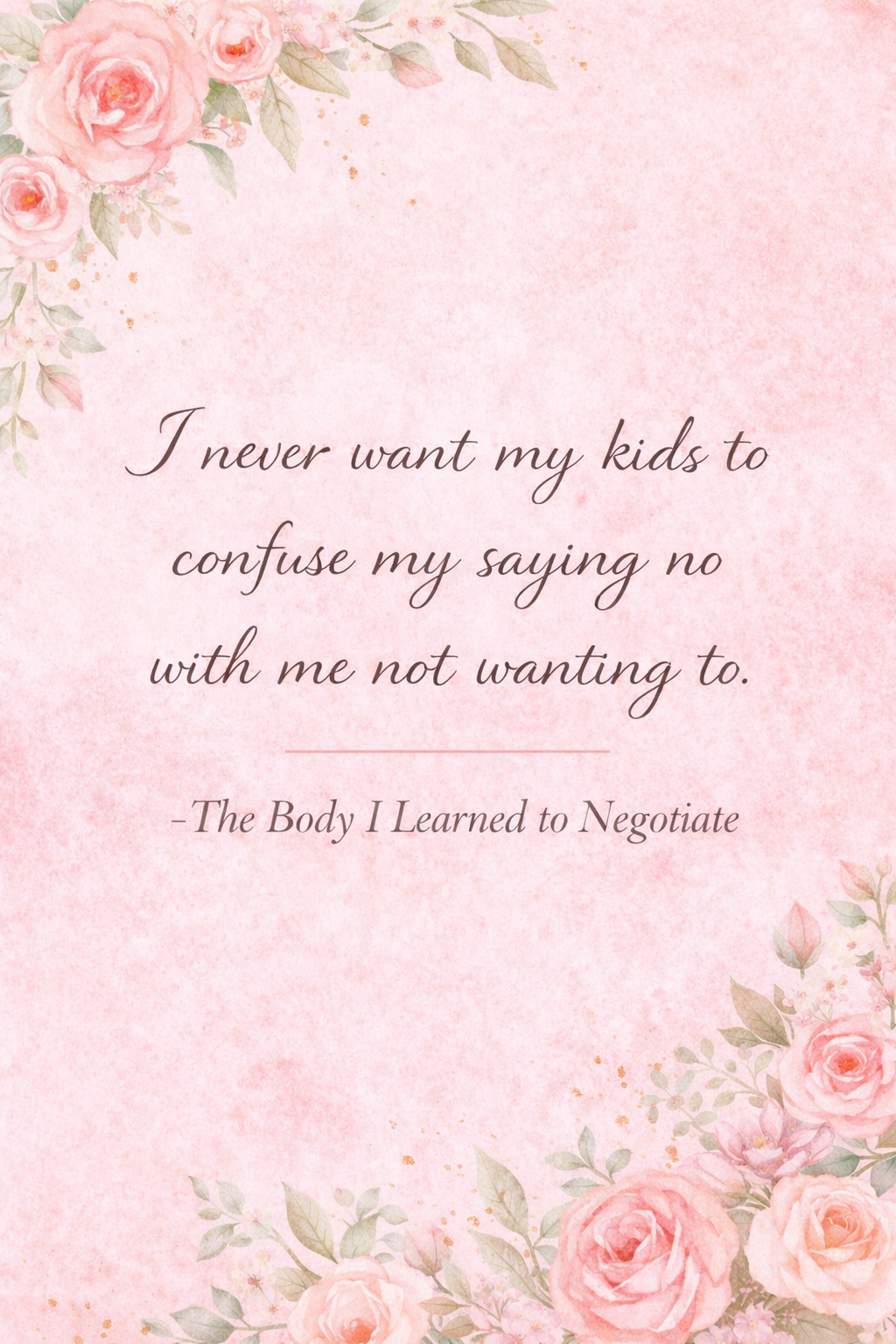
I never want my kids to confuse my saying no with me not wanting to. I worry that a no will land as rejection, that they’ll hear it as disinterest instead of limitation. I worry they’ll remember the times I couldn’t instead of the times I wanted to.
So when they ask, my instinct is almost always yes.
Yes, even when I’m tired.
Yes, even when my body is warning me.
Yes, unless I absolutely have to say no.
That yes doesn’t come from obligation. It comes from love.
From wanting them to feel wanted, wanted to feel chosen. But sometimes that yes is tangled up with fear — fear that my body will be the thing they notice most, fear that limitation will overshadow intention.
That afternoon, I wasn’t just trying to spin. I was trying to protect something fragile: the idea that my children would always know how deeply I want to be with them, how much I want to play, how much I want to say yes.
Falling forced me to confront something I had avoided for years. Always saying yes isn’t the same as being fully present. And sometimes, the safest and most honest form of love sounds like no.
Motherhood didn’t create my limits. It revealed them.
This body I had spent years ignoring, managing, and trying to outwork had been communicating with me all along. Learning to negotiate with it — instead of against it — would take time. It would mean trusting that my children could learn the difference between not wanting to and not being able to. It would mean believing that my love isn’t measured by how often I say yes, but by how present I am when I do.
That understanding didn’t come all at once.
But this was the beginning.
Leave a Reply